BRINGING PEOPLE TOGETHER IS
GOOD BUSINESS
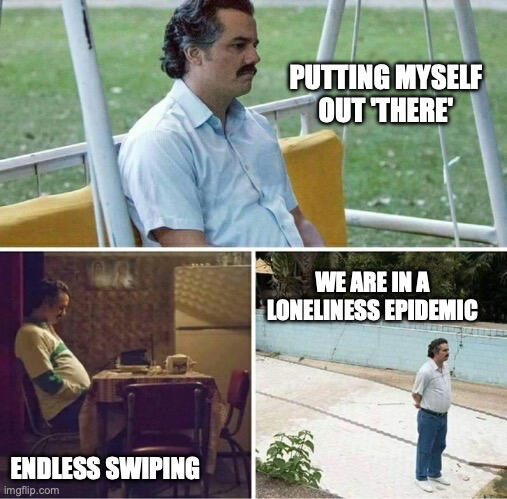
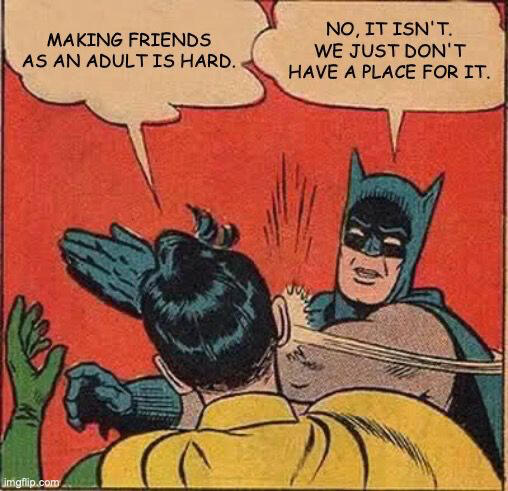
The 'loneliness epidemic', a topic brought to the forefront by the US Surgeon General in 2023, is rarely discussed in a holistic manner.Any discussion on loneliness that does not acknowledge modern love and its challenges is fundamentally disingenuous. Historically, strong family units characterized by loyal relationships have been the bedrock of connected societies. Why are such relationships dwindling in a 21st-century world where love is just a swipe and a match away? Interestingly, dating app burnout has been reported for both men and women, although their experiences couldn't be more different. Furthermore, dwindling marriage rates are accompanied by a concomitant decline in close friendships as people graduate from college and often work remotely, with little human interaction.Increasing levels of isolation have led to a variety of "looking for friends" posts, "where to meet people" videos, and even "speed friending" events. Moreover, social apps, with their online-first approach, suffer from hyper-specificity and diminished usefulness. Would people willingly spend countless hours joining niche groups, digging for scarce events, and burying themselves into echo chambers, or would they simply engage with someone in real life? Chances are they would overwhelmingly pick the latter if given a place for it.Speaking of place, if the solution to loneliness does not lie in apps or niche events, it must be found in the so-called third places, right? Arguably, yes, but unfortunately, we don't have one. Establishments that sell coffee or alcohol frequently employ deceptive marketing strategies to ride the coattails of connection and showcase themselves as social hubs despite lacking a facilitating business model. A person entering such places alone typically remains alone, with the lack of social affordances exposing the marketing sleight-of-hand in proclaiming third-place status. While coffee shops have become remote work hotspots wearing the garb of connection, watering holes take it a notch further by profiting off of a known carcinogen under the illusion of fun. Think about it: there wouldn't be a loneliness epidemic if the thousands of cafes and bars operating in every nook and corner of the country were indeed in the business of human connection. It begs the question, what if we had a chain of highly profitable social dining spaces that were precisely in the said business? It isn't a stretch of the imagination to infer that bringing connection-seeking people under the same roof can catalyze the formation of relationships while eliminating the friction caused by apps, events, and alcohol.Individuals grappling with isolation have likely heard the refrains "put yourself out there" and "making friends as an adult is hard." If people had a place to put themselves out there, making friends as adults would be delightfully simple. Throw mutual chemistry into the mix, and even dating could get a tad easier. It's almost as if great things intrinsically happen when people come together. It might be time for a business that creates a more connected world and sets the stage for humanity's upcoming triumphs. Exploring Mars is a neat thought, but with plenty of clean-up needed right here at home, ending isolation is a relatively low-hanging fruit and one with immediate societal benefit.